Source of the Chinese article: The Paper
The English version was generated by AI
In the event of any discrepancies between the Chinese and English versions, the Chinese version shall prevail.
The Paper has learned that the Autumn Science & Art Salon, co-hosted by the Shanghai Association for Science and Technology and APSMUSEUM, was recently held at the Shanghai Science Hall—a historic building that has long witnessed the cross-disciplinary symbiosis of science and art.
Renowned artist Xu Bing, Alistair Hudson, President of the Center for Art and Media Karlsruhe (ZKM) in Germany, Professor Liu Xin of the Tsung-Dao Lee Institute at Shanghai Jiao Tong University, among several other experts and scholars active in both the art and science communities, each explored diverse pathways for integrating science and art, drawing from their own research and practice.
Originally built as the French Club in the early 20th century, the Shanghai Science Hall is a French Renaissance–style building. In 1956, it was renovated into an activity venue for science and technology professionals, with its inscription written by Marshal Chen Yi, the first mayor of Shanghai in the People’s Republic of China. It became the first local venue in the country dedicated to science and technology workers. Nobel laureates such as Herbert A. Hauptman, Chen-Ning Yang, Tsung-Dao Lee, Samuel C.C. Ting, as well as Sergei Korolev, the “father of Soviet rocketry,” have all taken the stage at the Science Hall.
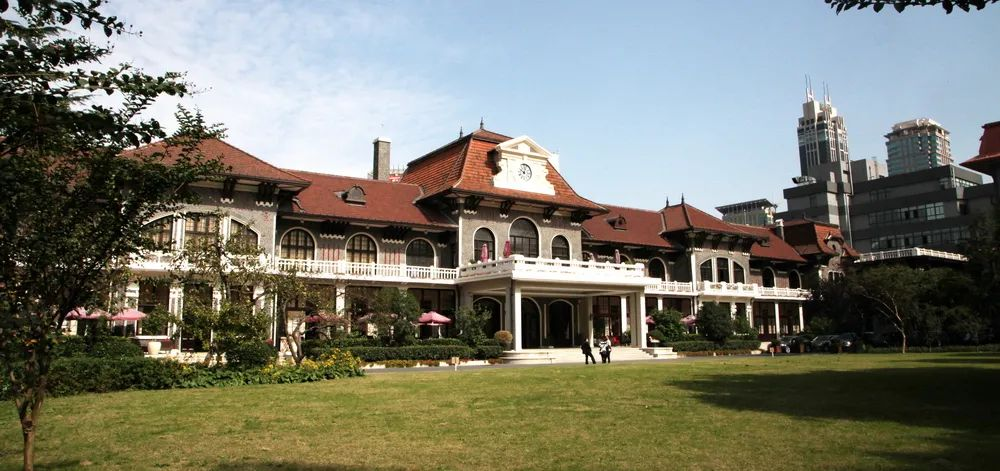
The Autumn Science & Art Salon centered its discussions and presentations on the theme of how science and art can contribute to contemporary society.
During the keynote sharing session, Alistair Hudson used the development of the Manchester art institutions where he previously worked as an example to illustrate how art institutions historically served to educate the working class and enable them to contribute creativity to society.
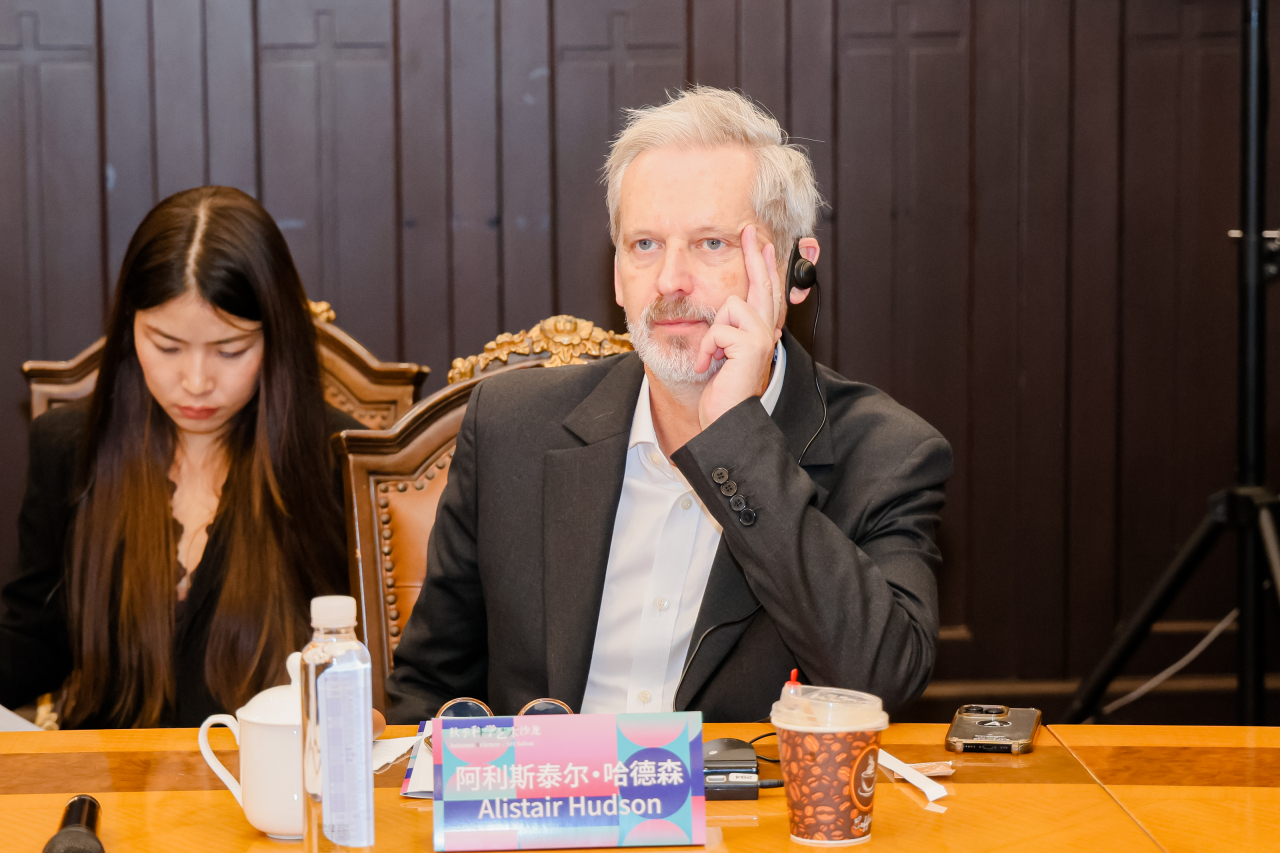
He traced the development of ZKM since its founding in 1989. Converted from a former factory, ZKM emerged one year before the birth of the internet. It functions not only as a museum but also as a center for research and production. “ZKM’s mission is the development, production, and dissemination of knowledge, based on the idea that technology, art, and society intersect,” he said. Today, ZKM houses ten venues with different functions, holds a collection of more than 12,000 media artworks, and maintains archives and documentation centers. It hosts electronic music festivals, performances, and various public programs that attract around 3,000 visitors and students each year.

Hudson highlighted ZKM’s recent cross-disciplinary practices in technological applications. For example, ZKM combines traditional artworks from its collection with artificial intelligence, offering visitors “customized interpretations” that allow historical works to be reread in new contexts. It has launched projects such as the “Companions” initiative, exploring networks of human intelligence, and collaborates with artists worldwide—including Chinese artist Zheng Guogu and the Congolese Plantation Workers’ Art League—to create works that challenge existing knowledge-production systems. At the core of these practices, Hudson emphasized, is not technology itself, but the use of technology to deconstruct and reorganize power relations within knowledge systems. Building on this, he proposed the concept of “Museum 3.0,” arguing that museums should no longer be merely spaces for public participation, but places of true convergence—sites where people gather and engage in dialogue for the future.

Artist Xu Bing joined the salon online and shared the space art project he is currently working on. He recalled that seven years ago, after receiving an invitation from Origin Space and Wen De, he began exploring art creation in conjunction with rocket technology. In his research, he found that the relationship between space and contemporary art has grown increasingly close, driven by rapid advances in space technology—especially the rise of private aerospace companies, which have opened opportunities for artists to create using hard space technologies.

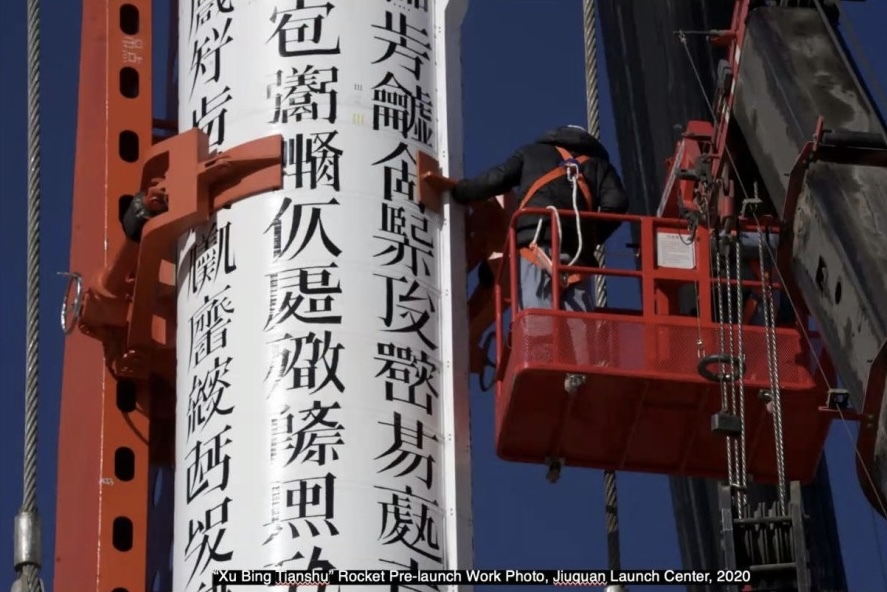
The process, however, has involved both setbacks and breakthroughs. Currently, two art satellites, SCA-1 and SCA-3, are in orbit and being used for artistic creation. Xu Bing has also launched the “Xu Bing Art Satellite Residency Program,” which is open to artists worldwide; over 70 artists have participated in the past year alone.
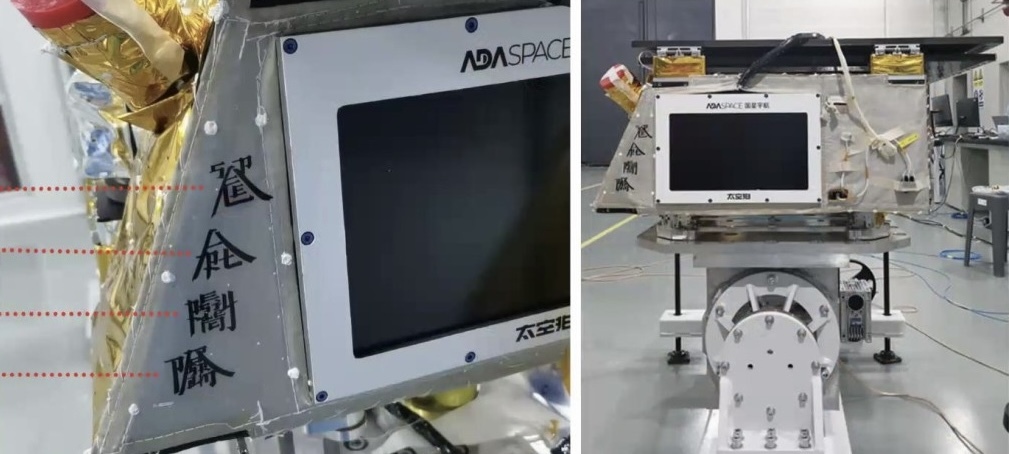
In Xu Bing’s view, the space art project expands the boundaries of artistic creation, prompting artists to recognize the limitations of their own imagination and challenging established artistic mindsets. He also believes that the essence of art originates in carbon-based human sensory experience—sight, hearing, smell, taste, and touch—areas in which AI cannot fully replace humans. For him, art and AI must compete, stimulate, and restrain each other in order to foster a balanced development of human civilization.

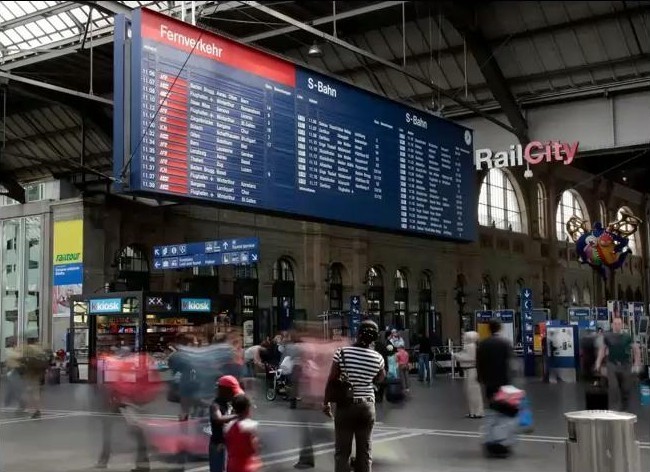
Swiss artist Andreas Gysin, known for his cross-disciplinary experiments in graphic design, generative art, and interactive installations, shared how he uses programming languages and display technologies in his creative process. For example, he creates works in which text is programmed to self-correct, resulting in presentations that feel organic and alive. One aspect of his work is based on mechanical split-flap modules found in train stations and gas stations; through textual recomposition and digital display, he generates new graphic cues and visual languages, exploring concepts of form, composition, and speed.
Professor Liu Xin of the Tsung-Dao Lee Institute at Shanghai Jiao Tong University introduced the Lee Tsung-Dao Science and Art Center. Its founding was inspired by theoretical condensed matter physicist Xiao-Gang Wen (Member of the U.S. National Academy of Sciences and MIT Professor), who believes that fundamental scientific research requires unbounded imagination—and that art is the field where imagination thrives the most. Therefore, science and art should mutually stimulate innovation.
Liu cited Tsung-Dao Lee as an example: Lee advocated that science and art are two sides of the same coin, and the artistic creation embedded in his lattice gauge theory demonstrates the fusion of scientific and artistic thinking. He also drew connections between scientific concepts and works by artists such as Picasso and Dalí—highlighting how Dalí’s The Disintegration of the Persistence of Memory reflects notions embedded in relativity and quantum mechanics.

Professor Hu Liang from the School of Computer Science and Technology at Tongji University explained that with the rise of ChatGPT and other large AI models, AIGC (AI-Generated Content) technologies have rapidly expanded, becoming widely adopted in fields such as finance, healthcare, and law. Today, AI-generated content online has already surpassed human-created content. AIGC can produce text, images, and videos, generate personalized content based on user characteristics, and collaborate with humans through prompt-based workflows for image creation and editing.
He noted that AI Agents are now a major research focus. Through division of labor and collaboration among multiple agents, future systems may directly generate complex finished works. He also discussed the potential of brain–computer interfaces for artistic creation—such as decoding fMRI signals and translating brain activity into imagery—opening entirely new frontiers for creativity.

During the subsequent roundtable discussion, artists and technologists shared perspectives on AI from their respective fields. Hudson argued that AI remains a primitive technology: it can currently process and reorganize data, but in the future it will reach a stage of autonomous decision-making. He stressed the need to embrace diverse forms of intelligence and rethink how different disciplines evaluate AI and art.
Digital artist Guo Ruiwen shared that in her own workflow, she rarely lets AI directly produce the final output, expressing the importance of maintaining authorial control and having a clear creative attitude toward AI usage.
Poet and artist Han Bo, drawing from his experience in Greece, noted that Aristotle was a pioneer of system science and interdisciplinary research. Aristotle’s poetics, especially his views on drama, reflect the healing functions of traditional art. In Han’s view, the core issue in the discussion remains the timeless pursuit of truth, goodness, and beauty—namely, how new technologies can help artists achieve freer expression and better serve humanity’s quest for beauty.
Xu Bing emphasized that the core of art is to inspire new thinking and creativity. With the introduction of AI, the blending of data-driven capabilities and the human brain adds complexity but also vast potential, requiring scientists and artists to address the challenges together.

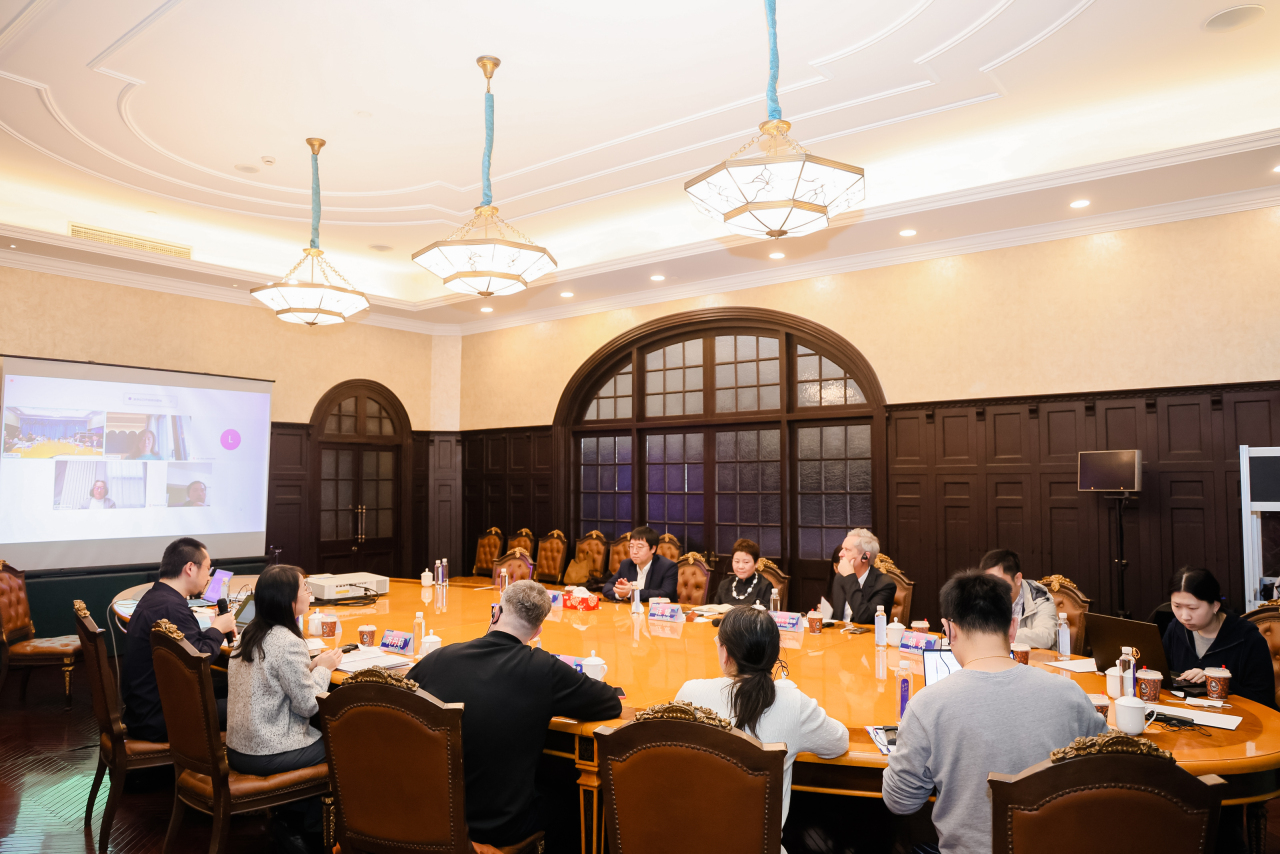
The Autumn Science & Art Salon was moderated by digital artist Luo Xiao. In his concluding remarks, Robin Wang, founder of Art Pioneer Studio, noted that although science and art originate from different domains—rationality and sensibility—they continuously inspire each other through exploration and practice. Going forward, experts in mathematics, astrophysics, dark matter, and life sciences will be invited for further discussions. Whether through technology empowering artistic creation or art expanding the imagination of science, both ultimately point to the same core mission:to ignite human creativity and imagination, propelling civilization forward.