Art Within Reach
Artist / Damien Hirst
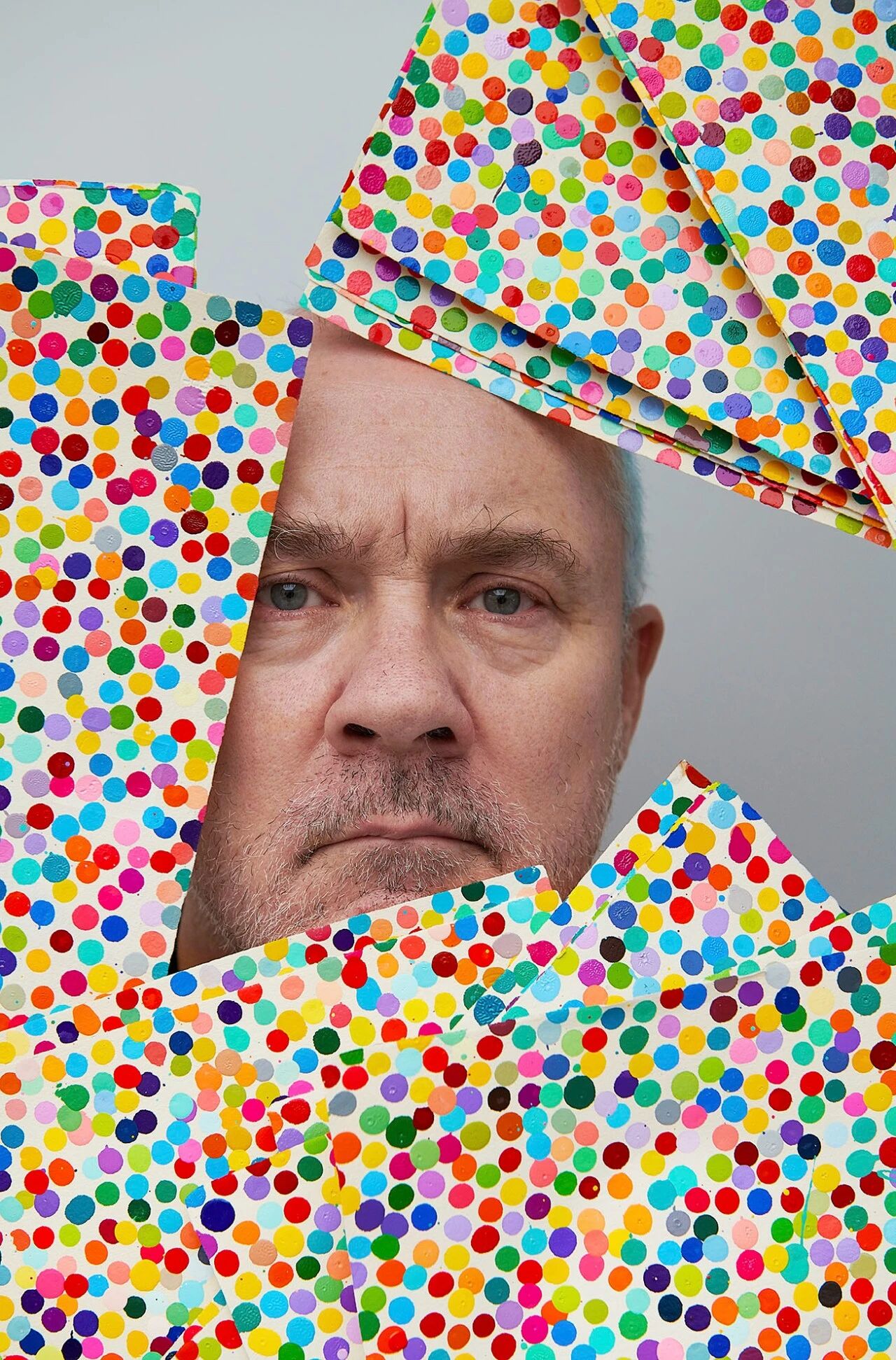
Damien Hirst was born in 1965 in Bristol, UK. He lives and works in London and Gloucestershire. Damien Hirst’s wide-ranging practice includes installation, sculpture, painting and drawing. Consistently challenging the boundaries between art, science and religion, his visceral, visually arresting work has made him a leading artist of his generation.
His works often cover the exploration of dual themes such as life and death, beauty and ugliness, as well as his attention to medicine and technology.
Hirst is perhaps best known for his Natural History series of works which present animals in vitrines suspended in formaldehyde. These iconic sculptures such as The Physical Impossibility of Death in the Mind of Someone Living or Mother and Child (Divided), aim to recast fundamental questions about the meaning of life and the fragility of biological existence.
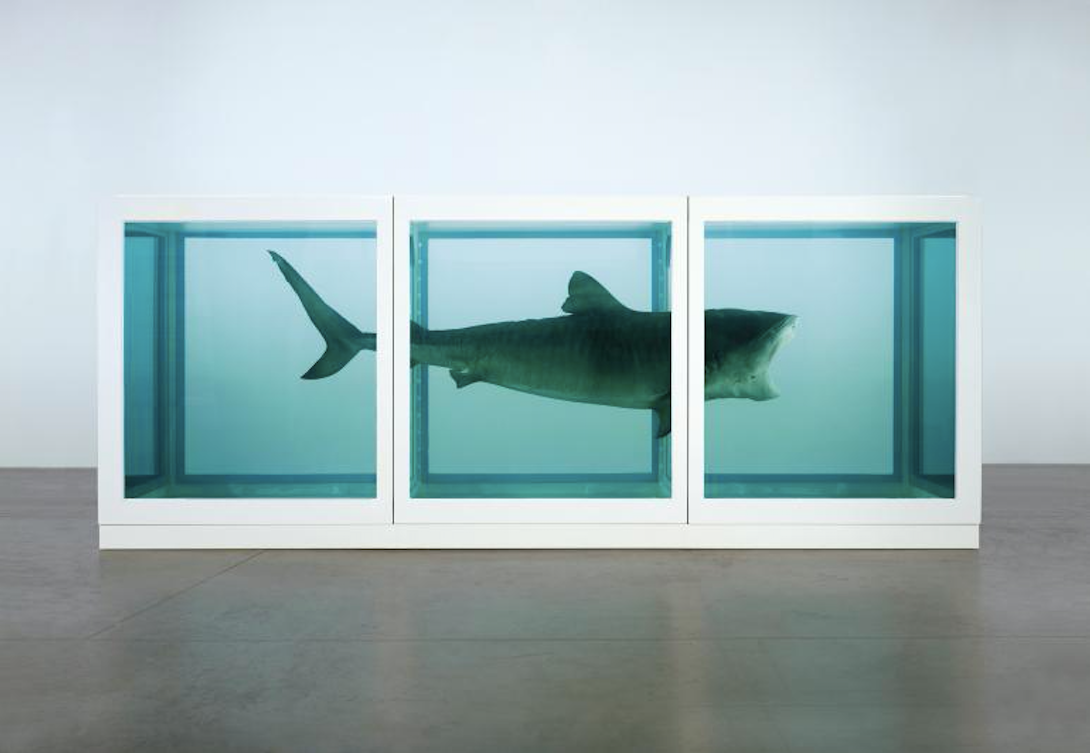
1991
Glass, painted steel, silicone, monofilament, shark and formaldehyde solution
217 x 542 x 180 cm
© Damien Hirst and Science Ltd. All rights reserved, DACS/Artimage
Photo: Prudence Cuming Associates Ltd
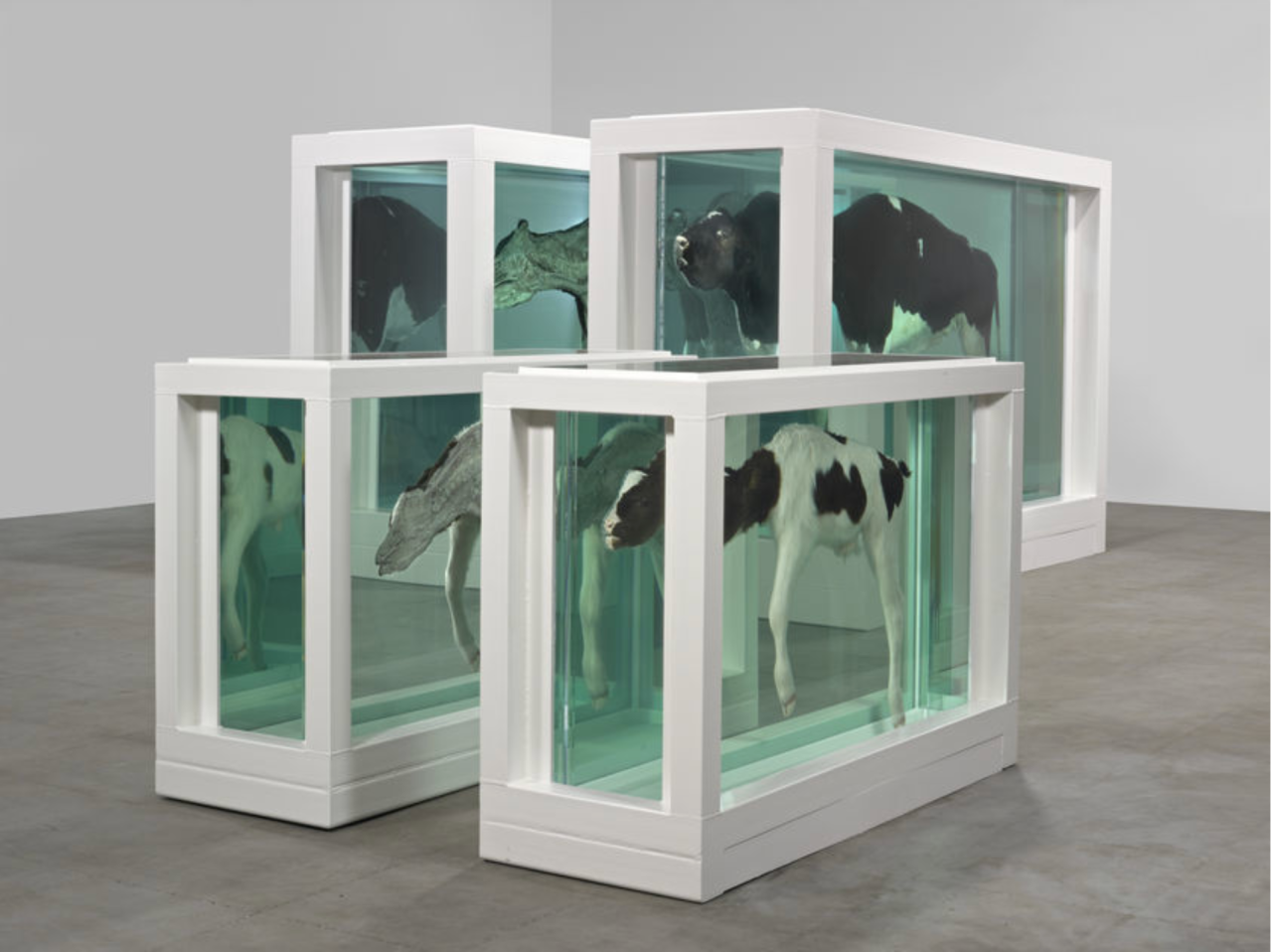
1993
Glass, painted steel, silicone, acrylic, monofilament, stainless steel, cow, calf and formaldehyde solution
190 x 322.5 x 109 cm, 102.9 x 168.9 x 62.3 cm
© Damien Hirst and Science Ltd. All rights reserved, DACS/Artimage
Photo: Prudence Cuming Associates Ltd
Science and our unquestioning faith in the power of pharmaceuticals remains one of Hirst’s most enduring themes. These ideas are investigated in the installation Pharmacy as well as in the "Medicine Cabinets" and "Instrument Cabinets" which display hundreds of pills or pill bottles, medical apparatuses or anatomical specimens within steel and glass cases.
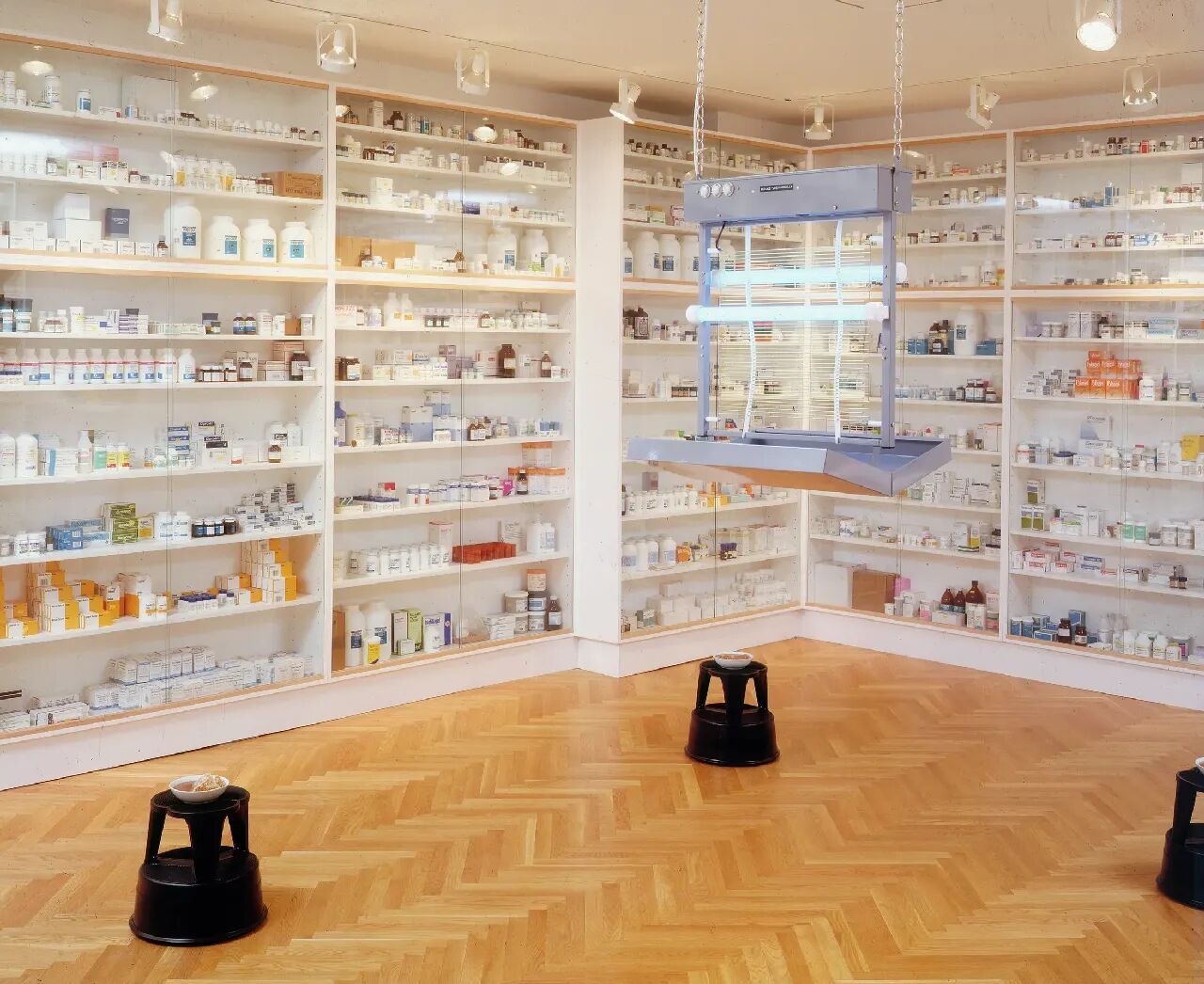
1992
Cabinets, glass, desk, apothecary bottles, medicine bottles, chair, fly zapper, foot stools, bowls and honeyVariable dimension
© Damien Hirst and Science Ltd. All rights reserved, DACS/Artimage
Image courtesy White Cube
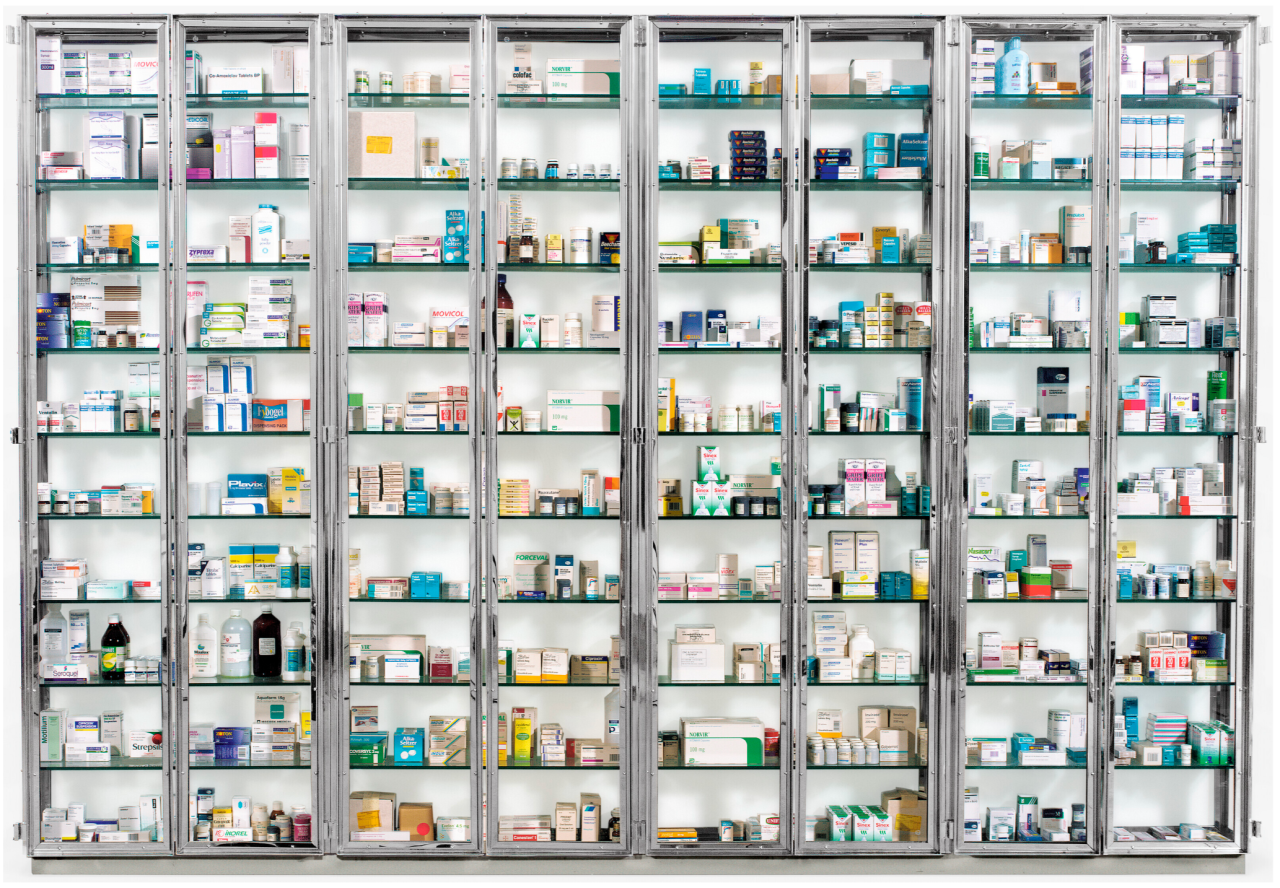
1997-1998
Glass, stainless steel, steel, nickel, brass, rubber and medical packaging
249 x 368 x 28.5 cm
© Damien Hirst and Science Ltd. All rights reserved, DACS/Artimage
Image courtesy Sotheby's Picture Library
In 2007, Hirst created what is arguably his most provocative work: For the Love of God, a life-sized platinum cast of a human skull, covered entirely by 8,601 VVS to flawless pavé set diamonds. Although without precedent in art history, the work operates as a traditional memento mori using an object to address the transience of human existence.
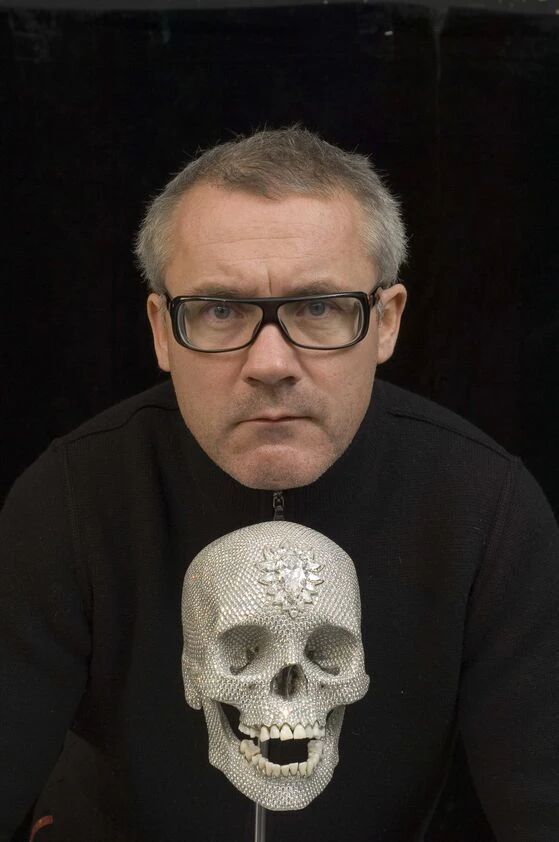
2017
Pkatinum, diamonds and human teeth
17.1 x 12.7 x 19.1 cm
© Damien Hirst and Science Ltd. All rights reserved, DACS/Artimage
Photo: Prudence Cuming Associates Ltd
Hirst is equally well-known for his paintings such as the series of works with butterflies suspended in thick layers of gloss paint and the "Kaleidoscope Paintings" where thousands of butterfly wings are arranged in mandala-like patterns. Omniscience is a monumental Kaleidoscope painting executed in 2007. Here, Hirst presents us with a kaleidoscopic vision of hundreds of meticulously placed butterfly wings, set against a sizzling backdrop of vivid red gloss paint. Omniscience is a highly kinetic work in which the butterfly wings appear to rotate and shift before the viewer’s eyes.
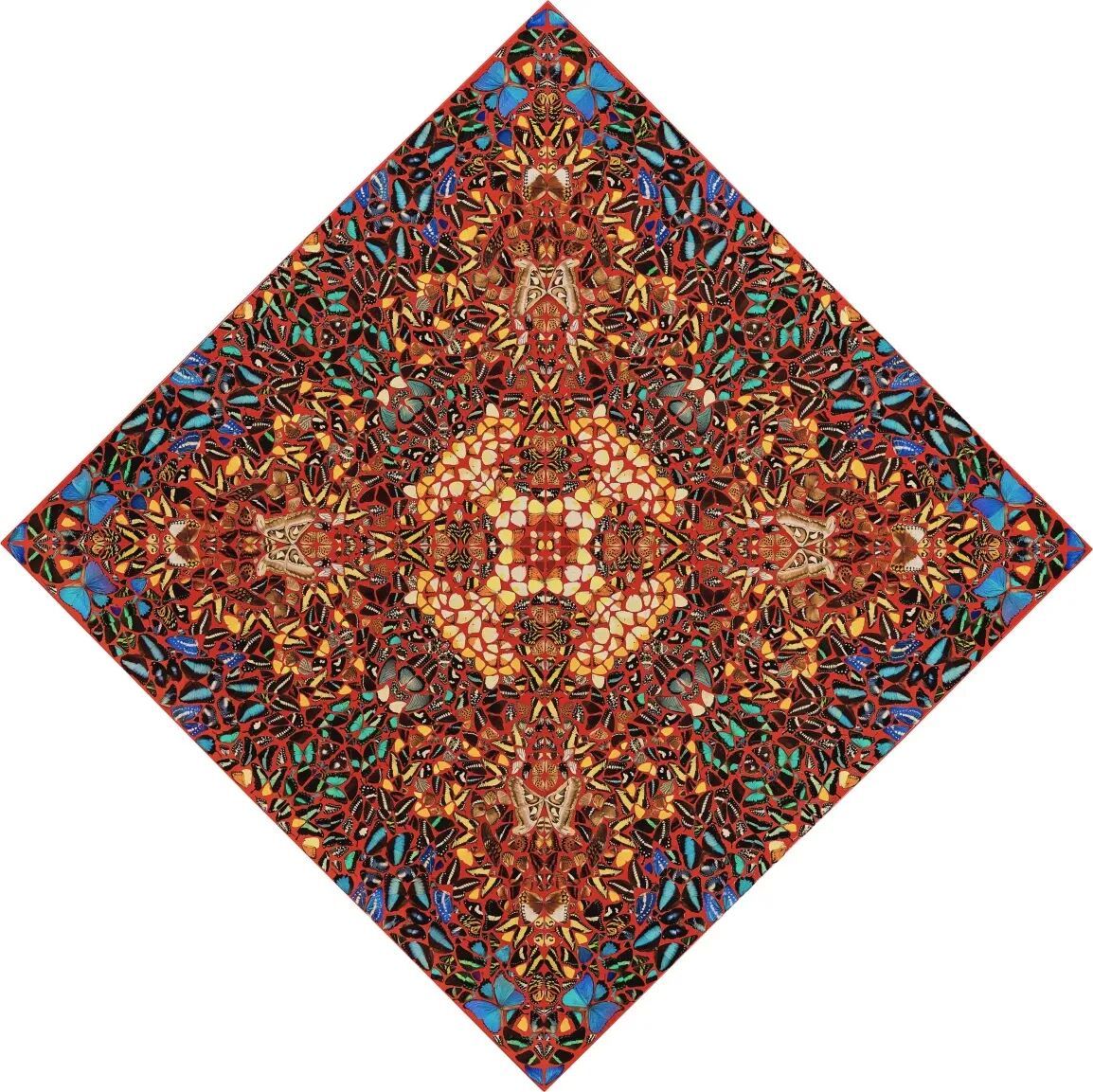
2007
Butterflies and household gloss on canvas
258.6 x 258.6 cm
© Damien Hirst and Science Ltd
Image courtesy Sotheby's
In the Spin series, Hirst uses a machine that centrifugally disperses the paint as it is steadily poured onto the canvas. The chance spontaneity of the Spins stands in contrast to the more formulaic Spot series which have a rigorous grid of uniformly sized dots in different colours. Both series, however, suggest the idea of an imaginary mechanical painter. Contrastingly, in 2009 Hirst embarked on a series of paintings that represented a radical shift, returning to painting alone.
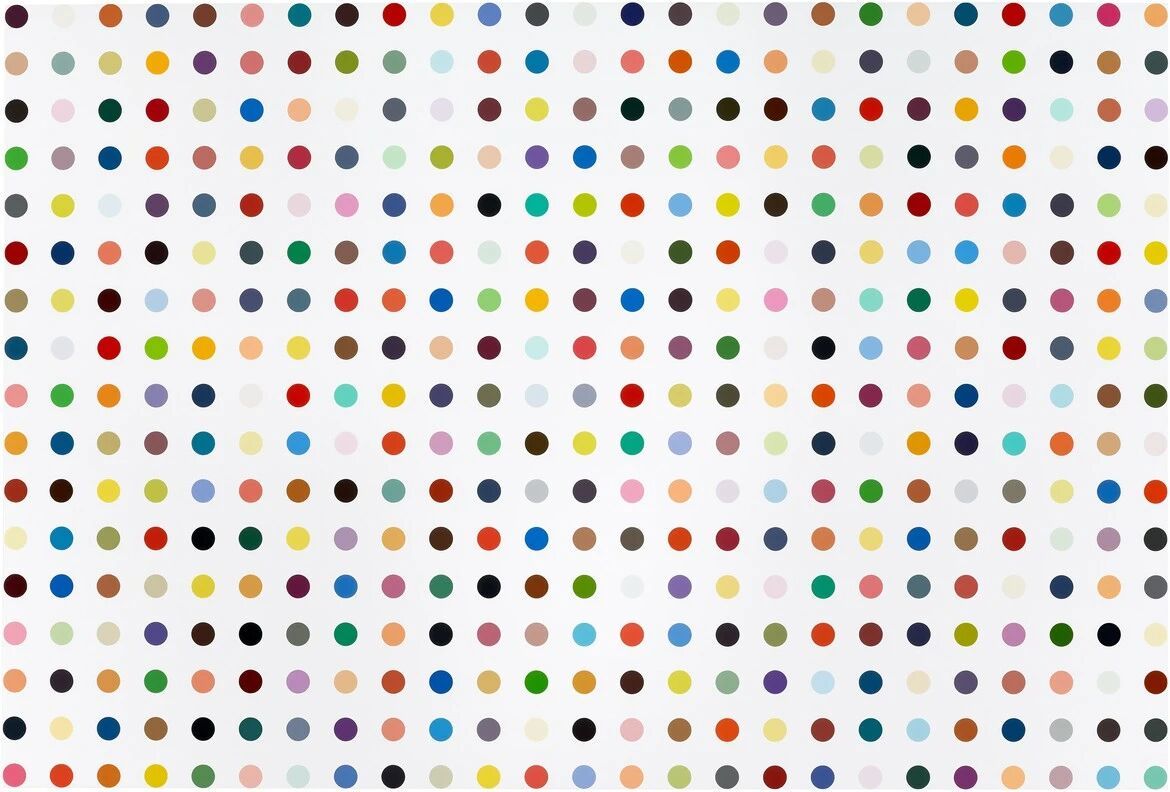
2010-2011
Household gloss on canvas
251.5 x 373.4 cm
© Damien Hirst/ Science Ltd, 2012. Photo: Prudence Cuming Associates
Image courtesy Gagosian Gallery
In 2017, Hirst presented his ten-year long project Treasures from the Wreck of the Unbelievable at Punta Della Dogana and Palazzo Grassi in Venice. Examining notions of collecting and the mechanisms of art history, as well as human endeavor in the face of mortality, the project is manifested through almost 190 separate works. These focus on a series of treasures and artefacts collected by the freed Roman slave Cif Amotan II, hauled from a ship wreck in the Indian Ocean which had lain untouched for 2,000 years. Weaving fact and fiction to create a labyrinthine narrative, Hirst combines valuable archaeological relics hauled from the wreck – some of which are so encrusted with coral and marine life that their forms are unrecognizable – with his own sculptures, documentary photography, video and drawing. The project highlights the power of myth, told through a hierarchy of objects that range from coins and plates to monumental sculptures, to expose ideas of value and the mutability of history, belief and art itself.
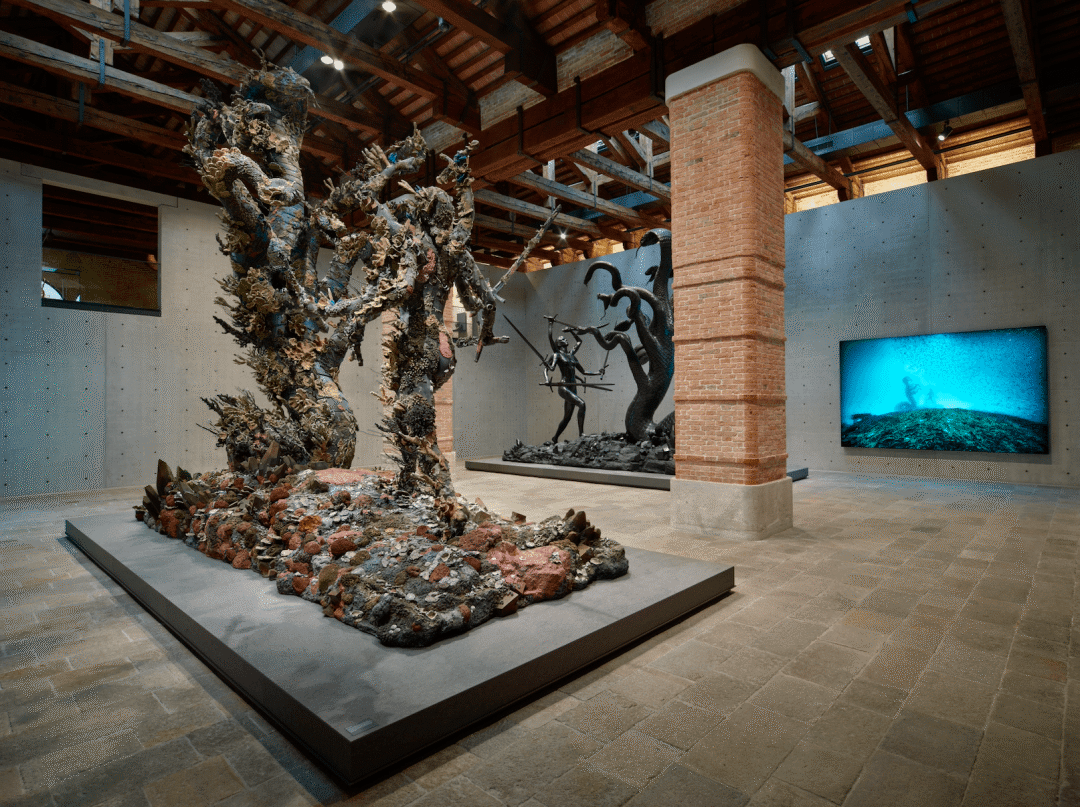
2017
Palazzo Grassi and Punta della Dogana, Venice, Italy
© Damien Hirst and Science Ltd. All rights reserved, Adagp, Paris / DACS/SIAE 2017
Photo: Prudence Cuming Associates Ltd
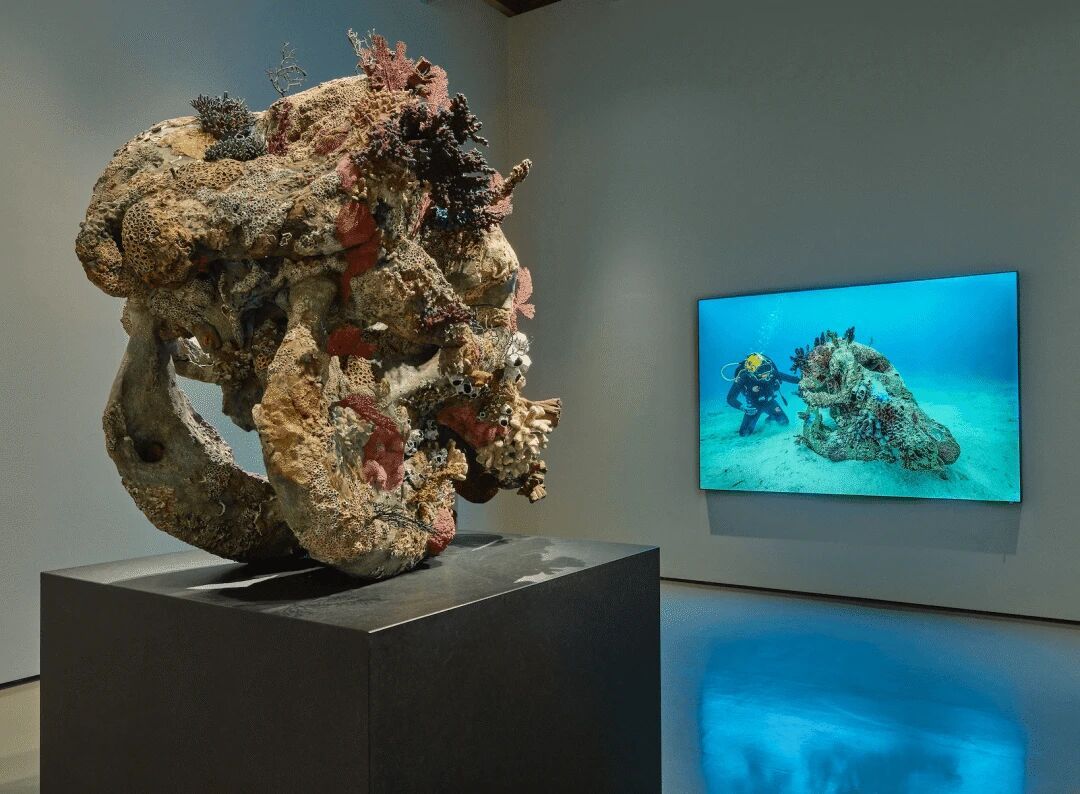
2017
Palazzo Grassi and Punta della Dogana, Venice, Italy
© Damien Hirst and Science Ltd. All rights reserved, Adagp, Paris / DACS/SIAE 2017
Photo: Prudence Cuming Associates Ltd
Damien Hirst’s recent series, Cherry Blossoms, is a continuation of his career-long investigation into painting. The artist reinterprets, with playful irony, the traditional subject of landscape painting as well as the great artistic movements of the late nineteenth and twentieth centuries, from Impressionism to Action Painting.
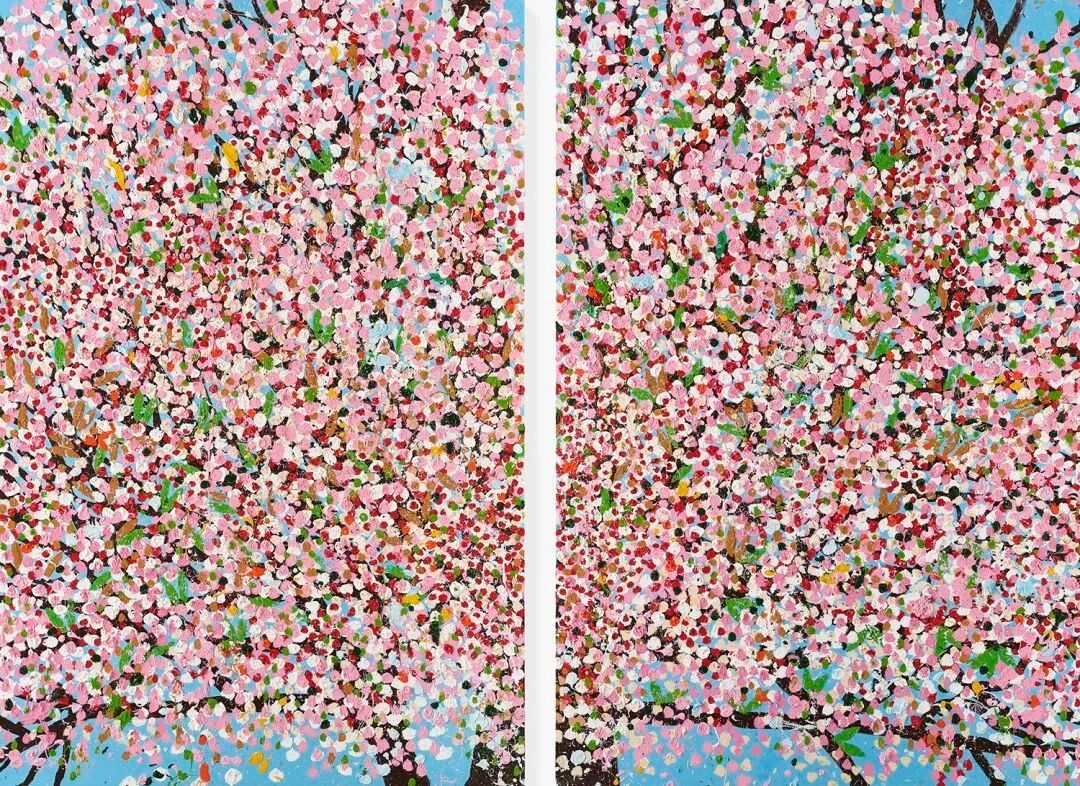
2018
Oil on canvas274 x 183 cm
© Damien Hirst and Science Ltd. All rights reserved, DACS 2021
Photo: Prudence Cuming Associates
Exhibitions
Since 1987, over 90 solo Damien Hirst exhibitions have taken place worldwide, and he has been included in over 300 group shows. In 2012, Tate Modern, London presented a major retrospective survey of Hirst’s work in conjunction with the 2012 Cultural Olympiad. Hirst’s other solo exhibitions include Qatar Museums Authority, ALRIWAQ Doha (2013–2014); Palazzo Vecchio, Florence (2010); Oceanographic Museum, Monaco (2010); Rijksmuseum, Amsterdam (2008); Astrup Fearnley Museet für Moderne Kunst, Oslo (2005); Museo Archeologico Nazionale, Naples (2004); Palazzo Grassi and Punta della Dogana, Pinault Collection, Venice (2017), Post Truth, Fake News & Alternative Facts, Haifa Museum, Israel (2019), Villa Borghese, Rome (2021); Fondation Cartier, Paris (2021) amongst others.
Collections
His work features in major collections including the British Museum, The Hirshhorn Museum and Sculpture Garden, the Museum of Modern Art, New York, Tate, the Stedelijk Museum, the Yale Center for British Art, The Broad Collection, the Victoria and Albert Museum, Fondazione Prada, and Museo Jumex, among many others.
This article is sourced from Damien Hirst official website.